The Role of Manufacturer, Distributor and Service Provider in a CRM
Learn how manufacturers, distributors, and service providers collaborate within a CRM system to enhance efficiency, customer satisfaction, and business growth.
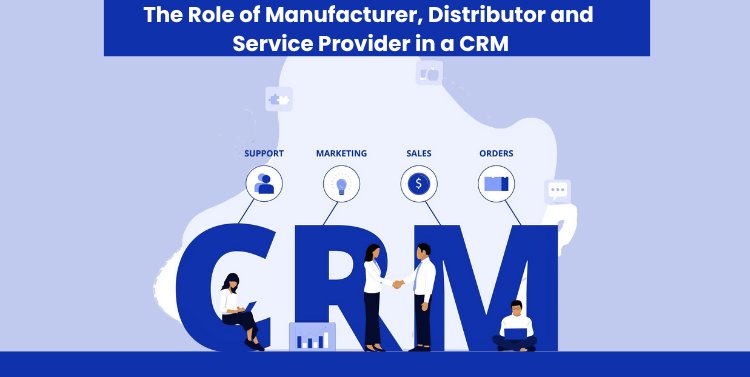

Every business has one common goal to focus on, which is growth. But when the company grows, its challenges also grow along with the business. Managing these operations, keeping track of clients so that no one is missed, and planning for smooth communication within the team can become hard to manage all at once. CRM (Customer Relationship Management) software steps in to help you handle the situation. It is a powerful tool for organizing existing processes and improving customer satisfaction. However, the role of CRM doesn’t stop there; finding the right CRM and installing it into the system is not a small task.


Behind our successful use of a CRM lies a big effort of people and companies involving multiple roles, like the manufacturer who develops the CRM, the distributor who ensures it reaches the right users, and the service provider who delivers a complete, all-in-one solution. Even though there are a lot of differences between these roles, their ultimate goal, in some way or another, remains the same—customer satisfaction. In this blog, we’ll get into the roles, responsibilities, and differences among these three sectors and explore how dovyo CRM stands out as a unique service provider, creating a simple and productive business ecosystem.
Manufacturer, Distributor, Vs CRM Service Provider
All three divisions—manufacturers, distributors, and CRM service providers—differ from each other and fulfill unique requirements. Figuring out the different roles that manufacturers, distributors, and service providers play is the first step before selecting the best CRM solution. Here is the detailed version that will help you understand more and choose better.
The Role of the Manufacturer in CRM
A CRM manufacturer plays a major role in building a CRM. They take complete responsibility for creating the product from scratch. This includes designing, coding, and testing. Their job doesn’t end after the initial release; it’s an ongoing process of innovation and improvement.
-
Design and Development: The manufacturer takes in the responsibility of developing the core functionalities of the CRM, making sure it meets the technical standards and user requirements. This process takes in creating a UI, UX, features, and architecture.
-
Bug Fixes: Software is never a complete one on the first go. Manufacturers continuously monitor the CRM for bugs or glitches and release updates to resolve these issues as soon as possible.
-
Feature Updates: Business needs to grow, and so should the software. Manufacturers regularly introduce new features to keep the CRM stay on top in the competitive market. For example, they might add advanced analytics, AI tools, or integrations with the platforms.
-
Security: Data security is considered a major factor in a CRM. Manufacturers makes sure that the CRM is equipped with the latest security measures, such as encryption and multi-factor authentication, to protect the top business and customer data.
-
Scalability: As businesses grow, there is also a need for CRM to expand. Manufacturers design software that can grow with the company, seeing that it remains top for both small startups and large enterprises.
The Role of the Distributor in CRM
A role of a distributor in a business is essential for building a connection between manufacturers and sellers or final consumers. In order to reach the correct audience, they make sure that products are not only delivered properly to the market but also rightly reached to them. Here is the roles and responsibilities of a distributor.
Bulk Purchasing: Distributors usually buy goods in bulk from the manufacturers. Manufacturers can concentrate on production and creation work while distributors handle the business side of getting their products to market to reach them to buyers.
Inventory management: Distributors keep and supervise them in after they are purchased. They help retailers maintain an even supply without worrying about shortages by making sure the inventory is safe, and prepared to reach the customer.
Marketing and Promotion: Distributors actively market their goods to buyers in addition to simply taking care of the product. They generate demand and convince sellers to stock and sell the products. This might involve offering marketing materials, conducting advertising campaigns, or giving product demos.
Logistics Management: From packaging to shipping and delivery, distributors are in charge of the complete process. By improving the supply chain and reducing delays, they guarantee that goods get at their destinations on time and in a perfect condition without damage.
Customer Service: Distributors sometimes may also provide retailers or customers follow-up support as well. This may include managing product returns, addressing warranty claims, or resolving problems. By providing this assistance, they maintain client satisfaction and build brand trust.
The Role of the Service Provider in CRM
A CRM service provider checks that businesses get not just the software but also the full support they need to use it by their own team. While manufacturers create the software and distributors sell it, service providers focus on delivering an end-to-end experience for the customers.
-
End-to-End Solutions: Service providers take the responsibility to handle everything from CRM implementation to ongoing maintenance, ensuring an easy experience for businesses.
-
Customization: They work closely with businesses to build the CRM to their specific needs, making sure the software goes along perfectly with their goals and processes.
-
Implementation Support: Service providers install and configure the CRM, providing it integrates smoothly with the company’s already running systems without any disruptions.
-
Training Services: Employees need guidance to use a new CRM. Service providers offer detailed training sessions so teams can collaborate easily.
-
Ongoing Maintenance: A service provider checks that the CRM stays updated, functional, and bug-free. They handle regular updates, feature changes, and technical fixes to keep the system running without any issues.
-
Technical Support: Post-implementation, businesses may encounter challenges or require assistance. Service providers offer reliable support to resolve issues, troubleshoot problems, and answer questions about the software’s features.
-
Consultation Services: Before implementing the CRM, service providers consult with businesses to understand their challenges and come up with the best solution for their unique requirements.
dovyo: Your One Complete CRM Service Provider
Apart from being a manufacturer and distributor few companies stay as a service providers. Similar way, dovyo isn’t just a manufacturer or distributor—it’s your complete CRM service provider.What sets dovyo apart is its complete approach to delivering a proper CRM solutions for unique business needs. Beyond offering CRM software customized to different business needs, dovyo promises easy implementation, training, ongoing maintenance, and top-notch customer support. This is because dovyo values its clients so much and always provides the best.
CRM Solutions
dovyo specializes in providing CRM solutions suited to process and industry-specific requirements. Whether you need a telecalling CRM for streamlined communication or a distributor CRM for supply chain management, dovyo offers solutions designed to address your unique challenges.
Complete Support Services
dovyo takes care of the entire CRM journey for its customers:
-
Implementation: dovyo ensures that the CRM software integrates smoothly into your business processes without any kind of disruption.
-
Training: The team provides hands-on training for your staff, providing that they can make the most of the CRM’s features.
-
Ongoing Maintenance: With regular updates, bug fixes, and performance improvement, dovyo sees to that your CRM remains reliable and up-to-date.
-
Customer Support: From troubleshooting to consultation, dovyo offers continuous support to help businesses adapt and grow with their CRM.
Direct Interaction with Businesses
dovyo works closely with businesses to understand their specific pain points and goals. By offering solutions that align with these needs, they provide a personalized and effective CRM experience.
By focusing on service rather than just manufacturing or distributing software, dovyo stands still, and provides a complete, customer-focused CRM experience. Whether you’re a startup looking to organize your leads or an established enterprise aiming to change workflows, dovyo’s solutions and complete support make it the go-to choice for businesses across industries.
Integrations Offered by dovyo CRM
dovyo CRM integrates easily with popular tools with just a click. These integrations make it easy for businesses to adapt the software to their existing workflows. Here is the list of integration tools that dovyo CRM provides along with the software:
Communication Platforms: Google Meet, Microsoft Teams, Whatsapp, Gmail, Outlook.
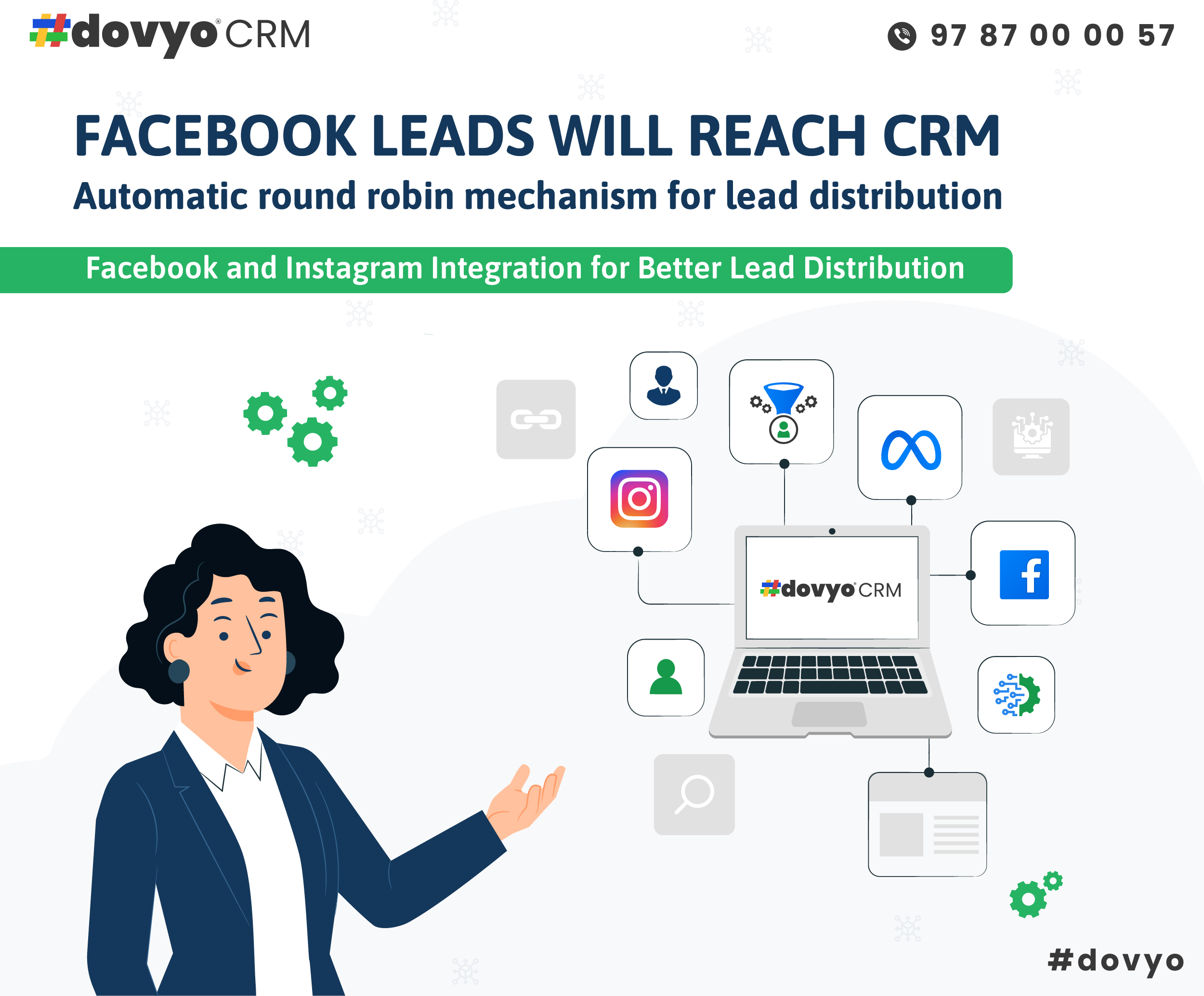
Lead Generation Platforms: Facebook Leads, Just Dial, IndiaMART, Trade India, Sulekha, 99acres.com, Housing.com.
Communication and Messaging Services: Pusher.com, Bulk SMS.
Payment Gateways: Payumoney, CC Avenue.
Cloud Telephony Integrations: Telecmi and Daffytel.
Why Choose dovyo CRM?
dovyo CRM isn’t just another CRM—it’s a complete solution designed to help businesses succeed. Here’s why it’s the best choice:
-
dovyo offers CRM options for specific industries, providing that businesses get the right tools that meet their unique needs.
-
With an easy-to-work-on interface, dovyo is easy to adopt and use, even for non-technical users.
-
dovyo CRM is budget-friendly, making it affordable to businesses of all sizes.
-
From training to tech support, dovyo gives a smooth experience for its customers.
-
Businesses can try dovyo CRM with a free trial, allowing them to experience its benefits before committing.
Take the First Step with dovyo CRM
The right tools can make all the difference, but every business faces its unique set of challenges. That’s why dovyo CRM offers a range of tailored solutions. That’s why dovyo CRM offers a range of customized solutions like telecalling CRM, service CRM, workflow CRM, field sales management software, distributor CRM, and more that are intended to assist companies in managing their operations, improving client interactions, and encouraging further development. Whether you want to increase sales, improve customer service, or simplify work processes, dovyo CRM has the resources you need. Book a free consultation today and try dovyo CRM for yourself. Experience the difference it can make for your business.